

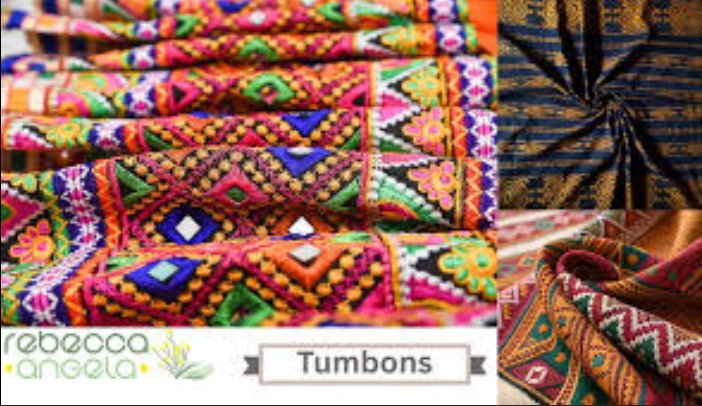
Words often carry more than a single definition, and “tumbons” is a perfect example of linguistic diversity. Depending on where you are and who you are speaking with, this term can refer to a local government area in Thailand, a piece of traditional clothing, a comfortable piece of furniture, or even a sacred cultural mask from the Pacific Islands.
This article explores the different meanings of “tumbons,” tracing its origins, global variations, and modern applications. Understanding these distinctions is essential for travelers, researchers, designers, and business professionals who may encounter this term in various contexts.
1. Tumbons as Thai Administrative Divisions
In Thailand, the most common** and official use of the word “tumbon” (often spelled tambon) refers to a subdistrict administrative unit .
The Hierarchy of Thai Local Government
Thailand is divided into 77 provinces. These are broken down into districts (amphoe), which are further subdivided into tambons (tumbons), and finally into villages (muban) . Understanding this structure is key to navigating the country’s governance and geography.
Below is a simple breakdown of the administrative levels:
| Level | Name | Role/Function |
|---|---|---|
| 1 | Province (Changwat) | Largest administrative division, governed by a governor. |
| 2 | District (Amphoe) | A subdivision of a province. |
| 3 | Sub-district (Tambon/Tumbon) | A cluster of villages; often has its own council or administrative organization. |
| 4 | Village (Muban) | The smallest administrative unit, comprising individual households. |
Key Facts:
-
As of 2024, there are 7,425 tambons across Thailand .
-
Each tambon is governed by a Tambon Administrative Organization (TAO) , which is responsible for local infrastructure, public health, and economic development.
-
“Tambon” is the correct Romanization based on the Royal Thai General System of Transcription, which is why common searches for “tumbons” often redirect to “tambons” .
2. Tumbons as Traditional Textiles and Cultural Garments
Outside of a governmental context, “tumbons” refers to traditional garments or woven wraps . Unlike the rigid definition of the Thai subdistrict, this meaning is fluid and aesthetic, often associated with artisan communities.
History and Origins
The origins of tumbons in textiles date back to agricultural and ceremonial societies. These garments were not merely functional; they served as markers of identity, social status, and community values . The patterns often told stories of nature, historical events, or spiritual beliefs.
Global Styles of Tumbon Textiles
Across the world, the concept of a woven, symbolic garment takes on different appearances based on local resources and customs. The table below highlights key regional variations:
| Region | Characteristics | Cultural Context |
|---|---|---|
| South Asia | Bright colors, intricate embroidery, reflective of celebration and spirituality. | Often worn during festivals, weddings, and major ceremonies . |
| South America | Handmade using natural fibres (cotton/wool), dyed with plant-based colors. | Designs are often inspired by local landscapes and nature. |
| Africa | Bold geometric patterns, high-contrast symbolic colors. | Used as a tool for visual storytelling, indicating tribe, status, or role. |
| East Asia | Minimalist designs, soft palettes, high-quality silk or smooth weaves. | Focuses on elegance, balance, and a refined sense of harmony. |
3. Alternative Meanings: Furniture and Spirits
The Outdoor Lounger
In lifestyle and outdoor design, “tumbons” has recently been adopted to describe reclining loungers or portable seating. In this context, the name embodies a philosophy of balance, adaptability, and comfort, often marketed for beach resorts and poolside relaxation .
The Tumbuan Mask of Papua New Guinea
A frequent source of confusion is the similarity between “tumbons” and Tumbuan (or Tubuan). This is a distinct term from Papua New Guinea (not Thailand). The Tumbuan is a sacred mask representing a female spirit in the Tolai culture .
-
Cultural Weight: Historically, women and children were forbidden to see the Tumbuan. It was used during male initiation rites.
-
Modern Use: Today, these masks are featured in cultural festivals and tourist performances, though they remain deeply significant as symbols of tradition and indigenous identity .
4. Modern and Commercial Uses
In the 21st century, the ambiguity of the word “tumbons” has made it attractive for branding. Because it lacks a single, rigid meaning in English, it is often used as a unique name for :
-
Tech Startups: Mobile apps or digital platforms (e.g., “The Tumbons App”).
-
Furniture Lines: Specifically targeting the outdoor leisure market.
-
Boutique Textile Brands: focusing on ethical, hand-woven fabrics.
Conclusion
The word tumbons is a fascinating example of how language evolves across geography and culture. It bridges the gap between concrete governance (the Thai subdistrict responsible for the daily lives of millions) and abstract artistry (the traditional garments representing intangible heritage).
While travelers navigating Thailand are best served using the spelling “tambon” to find local government offices or legal information, designers and cultural enthusiasts might encounter “tumbons” as a source of textile inspiration or even a style of lounge chair. Understanding the context is the key to unlocking the correct meaning of this versatile word.
FAQs
1. Is it “Tumbon” or “Tambon”?
Both are used interchangeably, but “Tambon” is the official academic and governmental spelling in Thailand. “Tumbon” is a common phonetic variation often seen in casual English writing or marketing contexts .
2. How many tambons are there in Thailand?
There are 7,425 tambons (subdistricts) across the 77 provinces of Thailand as of recent administrative data .
3. Are the Thai “Tambon” and the Papua New Guinea “Tumbuan” the same thing?
No. While the words sound similar, they are unrelated. Tambon is a geographic place in Thailand. Tumbuan is a sacred ritual mask from Papua New Guinea .
4. What is a Tambon Administrative Organization (TAO)?
A TAO is the local government body that administers a tambon. It is responsible for public services, waste management, local infrastructure, and community development .
5. Can I visit a “tumbon” as a tourist?
Yes. Every destination in Thailand is located within a tambon. Even famous places like Patong Beach (in Phuket) or Chiang Mai Old City fall under specific tambon jurisdictions. You can often find “Tambon Health Promoting Hospitals” or local markets run by the TAO.
6. What materials are traditional tumbon garments made of?
Historically, they are made from natural fibres such as cotton (breathable for warm climates) and silk (popular in East Asian weaving traditions)