

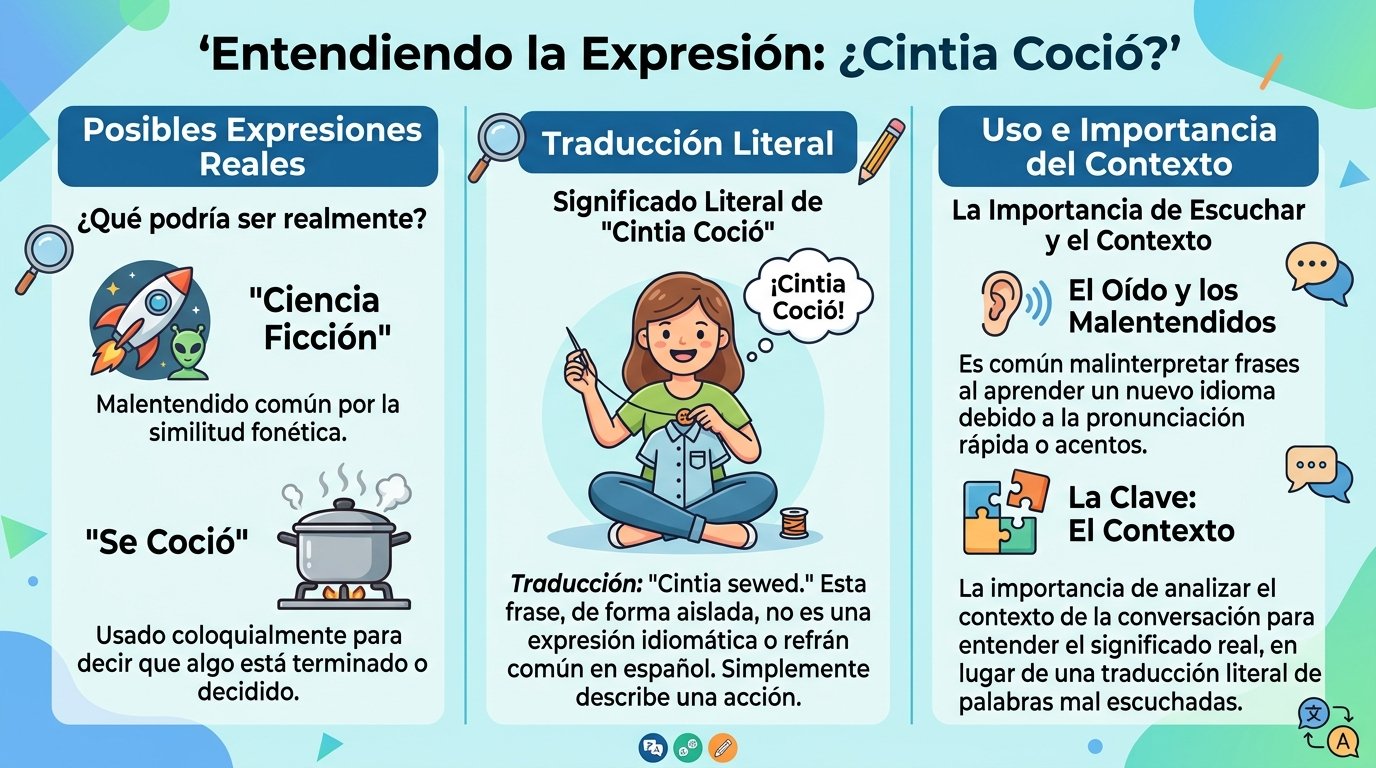
Language is full of words and phrases that carry cultural meaning and practical value. One such phrase is Cintia coció, a Spanish expression that often attracts attention from language learners and readers interested in Spanish grammar. Understanding how this phrase works can help improve language skills, reading comprehension, and communication. The phrase combines a proper name with a past-tense verb, making it an excellent example of how Spanish sentence structures function in everyday use. Whether you are studying Spanish for academic purposes, travel, business, or personal growth, learning expressions like Cintia coció can strengthen your understanding of verb conjugations and sentence construction while providing insight into the richness of the Spanish language.
What Does Cintia Coció Mean?
The phrase Cintia coció translates into English as “Cintia cooked.” In this sentence, Cintia serves as the subject, while coció is the past tense form of the Spanish verb cocer, which means “to cook” or “to boil.” The phrase is simple yet useful because it demonstrates how Spanish verbs change according to tense and subject. Understanding Cintia coció helps learners recognize past actions and identify verb forms in written and spoken communication. It is a straightforward example often used in educational settings to explain grammar rules and sentence structure in an easy-to-understand way.
The Grammar Behind Cintia Coció
Grammar plays a vital role in understanding Cintia coció. The word coció belongs to the preterite tense, which Spanish speakers use to describe completed actions in the past. This tense differs from present and future forms because it emphasizes an event that has already happened. In the phrase, the action of cooking was completed by Cintia at a specific moment in time. Learning how coció functions helps students grasp broader concepts related to Spanish verb conjugation. By studying examples like this, learners gain confidence in recognizing and using past-tense verbs correctly in their own conversations and writing.
The Verb Cocer and Its Importance
The verb cocer is commonly used in Spanish-speaking countries when discussing food preparation. It generally refers to boiling, cooking, or heating food until it reaches the desired condition. Since cooking is a daily activity, this verb appears frequently in conversations, recipes, and educational materials. The phrase Cintia coció serves as a practical example of how the verb operates in a complete sentence. Understanding cocer and its various forms can significantly improve vocabulary and communication skills. Language learners often encounter this verb early in their studies because of its relevance to everyday situations and cultural experiences.
Why Language Learners Study Phrases Like Cintia Coció
Language instructors often use simple phrases such as Cintia coció to teach grammar concepts effectively. Short sentences reduce confusion and allow learners to focus on specific elements such as verb conjugation, subject identification, and sentence structure. Because the phrase contains only two words, it is easy to analyze while still demonstrating an important grammatical rule. Students can quickly understand the relationship between the subject and the action being performed. Learning through concise examples also helps improve memory retention and encourages learners to create similar sentences using different names and verbs, expanding their language abilities.
The Role of Past Tense in Spanish Communication
Past tense forms are essential in everyday communication because people frequently discuss events that have already occurred. The phrase Cintia coció illustrates how Spanish speakers describe completed actions. Whether talking about meals, travel experiences, work activities, or personal stories, the preterite tense remains one of the most important grammatical structures in the language. By understanding examples like this, learners can participate more confidently in conversations and comprehend written texts more accurately. Mastering past-tense expressions is a key step toward achieving fluency because it enables individuals to describe events and share experiences effectively.
Cultural Connections Through Cooking Vocabulary
Cooking-related vocabulary often reflects cultural traditions and daily life. The phrase Cintia coció may appear simple, but it connects language learners with a broader world of food, recipes, and culinary customs. Spanish-speaking cultures place significant importance on cooking and shared meals, making verbs like cocer particularly relevant. Understanding these terms can enhance cultural awareness while improving language skills. Learners who study practical vocabulary gain a deeper appreciation for how language and culture interact. This cultural connection makes expressions such as Cintia coció more meaningful than simple grammar examples, turning them into gateways for broader learning experiences.
Common Contexts Where Cintia Coció Might Appear
The phrase Cintia coció can appear in textbooks, language exercises, reading materials, and educational discussions. Teachers often use it when introducing past-tense conjugations because it clearly demonstrates a completed action. It may also appear in stories or examples describing food preparation activities. Since the sentence is easy to understand, it works well for beginners while remaining useful for more advanced learners reviewing grammar concepts. Exposure to phrases like this in different contexts helps reinforce language patterns and encourages learners to recognize similar structures when reading books, articles, or conversational Spanish.
How Understanding Simple Sentences Improves Fluency
Fluency develops gradually through consistent exposure to vocabulary and sentence patterns. Simple phrases such as Cintia coció provide a strong foundation for language growth because they teach essential grammatical principles without overwhelming learners. Once students understand how a sentence like this works, they can apply the same pattern to countless other verbs and subjects. This transferable knowledge accelerates language development and increases confidence. Building fluency is not only about learning complex vocabulary but also about mastering basic structures that appear repeatedly in everyday communication. Small examples often create the biggest improvements over time.
The Educational Value of Cintia Coció
Educationally, Cintia coció represents more than a simple sentence. It serves as a practical tool for teaching verb conjugation, tense recognition, and sentence construction. Teachers appreciate examples like this because they are easy to explain and remember. Students benefit from clear, real-world language that demonstrates how grammar rules function in context. The phrase can also inspire additional learning activities, including translation exercises, writing assignments, and conversational practice. By studying straightforward examples, learners build a strong grammatical foundation that supports more advanced language study and long-term proficiency.
Conclusion
Cintia coció is a simple yet valuable Spanish phrase that means “Cintia cooked.” While brief, it provides important lessons about verb conjugation, past-tense usage, sentence structure, and practical communication. Understanding this expression helps language learners strengthen their grammar skills while gaining insight into everyday Spanish vocabulary. The phrase also highlights the importance of cooking-related language and its connection to culture and daily life. By studying examples like Cintia coció, learners can build confidence, improve fluency, and develop a deeper appreciation for the Spanish language. Small phrases often become powerful learning tools that support long-term language success.