
Norway is renowned for its breathtaking fjords, dense forests, and rich biodiversity. However, managing the delicate balance between human activity and wildlife requires robust local governance. This is where Viltnemnda (translated as the “Wildlife Committee” or “Game Board”) steps in.
While the term has recently gained niche popularity as the title of a horror video game on Steam, in a governmental context, Viltnemnda is a serious and vital municipal entity responsible for implementing the Norwegian Wildlife Act. This article provides an in-depth look at the real-world functions, history, and controversies of the Viltnemnda.
What is Viltnemnda?
The word Viltnemnda is derived from Vilt (wildlife/game) and Nemnda (committee/board). It is a municipal body appointed by the local council to handle specific wildlife management tasks.
Initially, these boards were state organs, but in 1993, the responsibilities were devolved to the municipalities. While some towns integrated these tasks into other administrative departments, many chose to keep a dedicated, elected Viltnemnda to ensure that decisions regarding hunting, conservation, and animal control are made by members with specific local knowledge or interest in the field.
Key Responsibilities of the Viltnemnda
The Viltnemnda acts as the bridge between national environmental policies and local realities. Their duties are broad and impact both landowners and hunters.
| Responsibility Area | Specific Tasks |
|---|---|
| Game Management | Setting annual hunting quotas for species like moose, deer, and small game to maintain population balance. |
| Conservation | Promoting wildlife welfare, organizing hunting areas, and managing “viltstellområder” (wildlife management zones). |
| Conflict Resolution | Addressing issues where wildlife poses a risk to livestock, crops, or public safety. |
| Animal Disposal | Managing reports of dead or injured wildlife. Note: Landowners are typically responsible for carcass removal, except near water sources. |
| Research & Advice | Driving local wildlife research and advising the municipal council on environmental strategies. |
Case Study: Handling Dead Moose
A practical example of Viltnemnda’s work comes from Målselv Municipality. In 2025, the local Viltnemnda reported approximately 30 moose drowned after falling through river ice. They clarified to the public that while the board registers these deaths, the landowner is responsible for removal—unless the carcass poses a risk to public drinking water, in which case the municipality takes charge.
Composition and Decision-Making
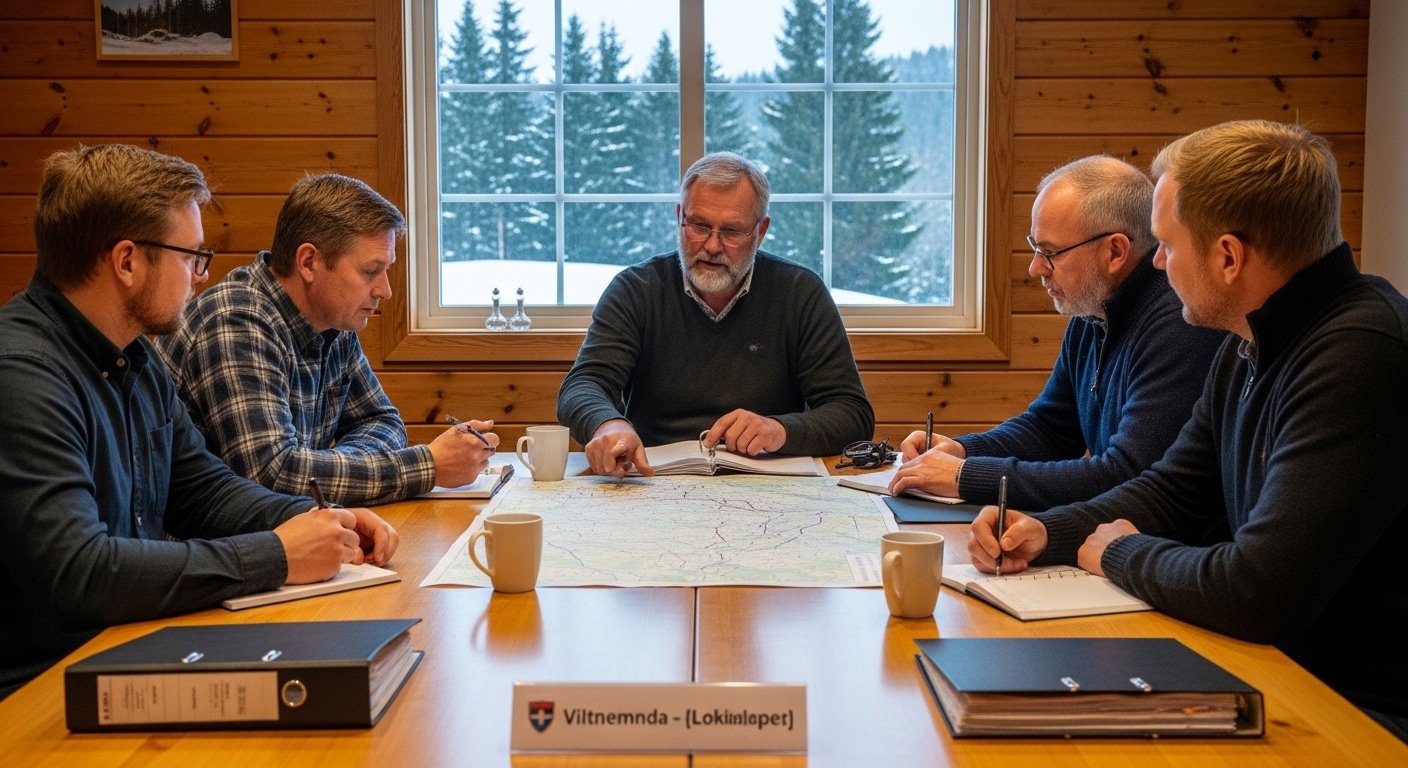
The committee is politically appointed and typically consists of 5 members with diverse backgrounds, including local politicians, forestry experts, hunters, and environmentalists. A designated secretary (often a “forest and environment advisor”) assists the board.
How they decide:
The Viltnemnda employs a structured, scientific approach. Decisions are based on population studies, environmental assessments, and often public consultation. While they aim for ecological sustainability, they must also consider the cultural tradition of hunting in Norway.
Controversies and Challenges
Like any body that rules on the culling of animals, Viltnemnda is not without controversy.
Critics often argue that some committees prioritize hunting quotas over ecological balance, potentially endangering specific species. Furthermore, decisions regarding predator control (wolves, bears, and lynx) frequently spark heated debates. Animal rights groups sometimes accuse the boards of lacking transparency or favoring lethal control over non-lethal solutions.
The “Other” Viltnemnda: A Horror Game
In a cultural twist, the search term “Viltnemnda” also leads to a retro PSX-style horror game developed for the Brackeys Game Jam in 2022. In the game, you play as “viltnemda” (a misspelling/alteration of the word), sent into a dark forest with only a flashlight to investigate a wounded deer—only to uncover supernatural secrets. While entertaining, this game is purely fictional and shares only the name with the serious municipal board.
Conclusion
The Viltnemnda is a cornerstone of Norwegian wildlife governance. By operating at the local level, it ensures that the management of moose, deer, and other species is tailored to the specific geography and needs of the community. It balances the competing demands of landowners, hunters, conservationists, and the law.
While it faces scrutiny over controversial culling decisions, the board’s commitment to evidence-based, sustainable management is essential for preserving Norway’s natural heritage for future generations. Whether you are a hunter applying for a felling permit or a citizen reporting a sighting, the Viltnemnda is the authority that keeps nature and civilization in harmony.
FAQs
1. What does the word “Viltnemnda” mean literally?
It translates to “The Wildlife Committee” or “The Game Board” in English.
2. Is Viltnemnda a national or local authority?
It is a local municipal authority, though it operates under the national Viltloven (Wildlife Act).
3. Who is responsible if I find a dead animal on my property?
According to Viltnemnda guidelines, the landowner is generally responsible for removing the carcass unless it is in a public water source.
4. Can I appeal a decision made by Viltnemnda?
Yes. If you disagree with a ruling (e.g., denial of a hunting license or a culling order), you can usually file a written complaint within a specific deadline (often 3-4 weeks, though regulations vary). The complaint is sent to the municipality; if denied, it may proceed to the Statsforvalteren (County Governor).
5. Is Viltnemnda the same as the horror video game on Steam?
No. The video game Viltnemda is a fictional horror game inspired by the concept. The actual Viltnemnda is a real government entity.